

Sample1 / 4
a stylized wooden rocking horse toy with a painted red saddle, yellow mane and curved runners
Text to 3D model generator
Describe an object and get a 3D model back. Text to 3D runs on Tripo H3.1, Tripo P1, Tripo P2, Hunyuan3D 3.1 Pro and Rapid, Rodin Gen-2.5 or Meshy 7.1, and the picker shows each one by name.
See what a text to 3D prompt becomes
Each card is the untouched model returned for the prompt quoted under it, at the model's default settings. Open a card to orbit it.
Rocking horse toy
Tripo H3.1“a stylized wooden rocking horse toy with a painted red saddle, yellow mane and curved runners” — 26 credits with the standard texture.
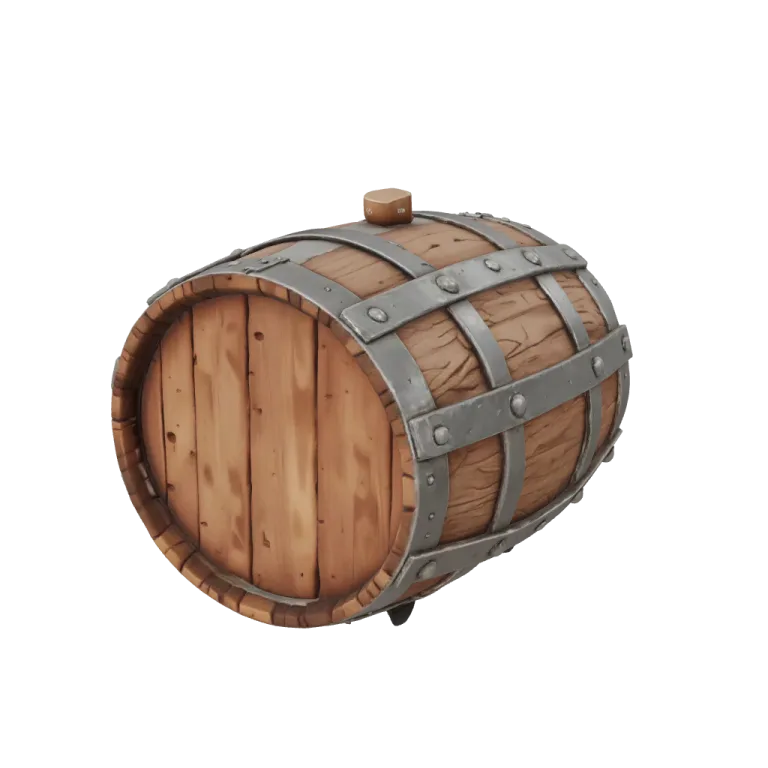
Fantasy barrel prop
Tripo H3.1“a stylized wooden barrel bound with iron hoops, fantasy game prop” — the same 26-credit default, returned as GLB and FBX.
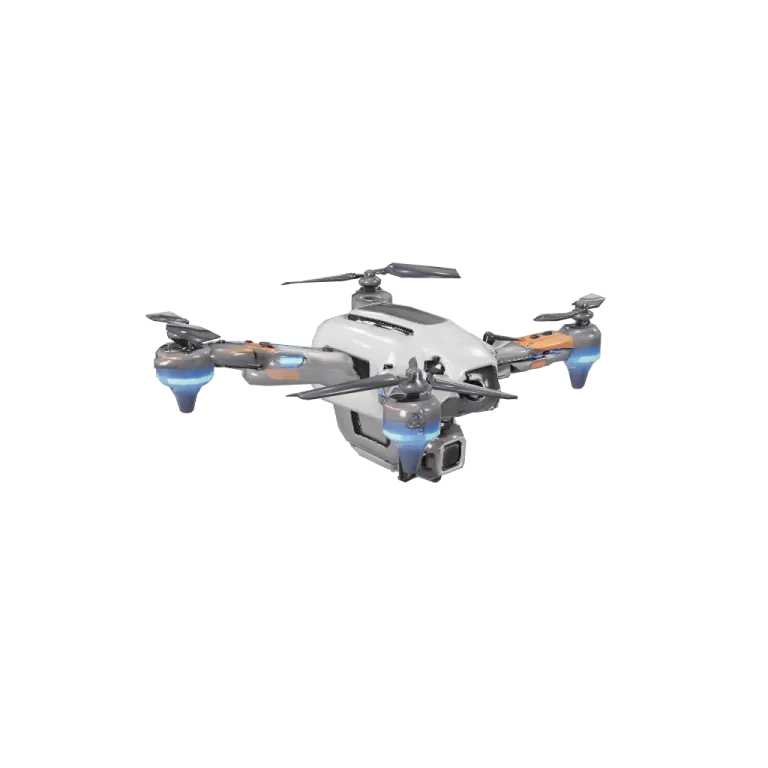
Sci-fi drone
Tripo P2“a stylized sci-fi quadcopter drone with glowing blue lights” — Tripo P2 at 138 credits, which removes baked-in lighting before it textures.
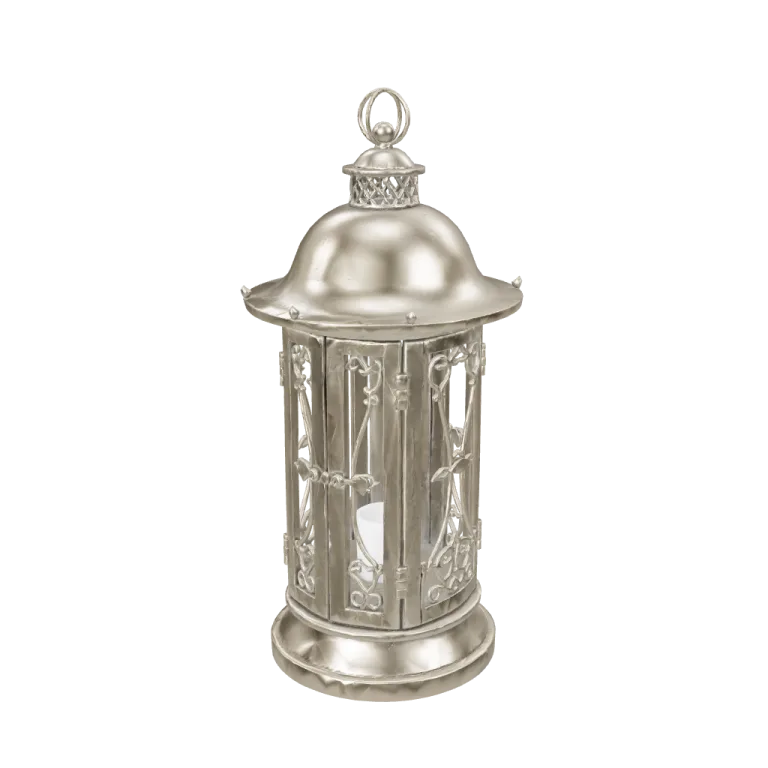
Brass lantern
Rodin Gen-2.5“an ornate brass lantern with glass panels” — Rodin Gen-2.5 at 50 credits with PBR materials, its default.
How prompt-based generation differs from image to 3D
With no picture to follow, the model decides the shape, proportions and colors from your words alone.


Cheaper to explore
A Tripo H3.1 text base costs 13 credits against 25 for an image base, and the texture is a separate 13. Drag across the rocking horse: the clay view is the shape the base paid for, the color is what the second 13 added.
Words leave the style open. To steer it, draft the look in the AI image maker first, from 5 credits a picture, then turn the one you like into a model with image to 3D.

Seven models, priced in the picker
Tripo H3.1, P1 and P2, Hunyuan3D 3.1 Pro and Rapid, Rodin Gen-2.5 and Meshy 7.1 take a prompt. The picker groups them by what they are good at and shows each one's formats, time and price before you choose.
Rodin Gen-2.5 and Meshy 7.1 can pose a character in a T-pose or A-pose for rigging, and Tripo P1 builds low poly of 2K to 20K faces straight from a prompt.
Text to 3D at a glance
The numbers behind a text to 3D run
Tripo H3.1, Tripo P1, Tripo P2, Hunyuan3D 3.1 Pro, Hunyuan3D 3.1 Rapid, Rodin Gen-2.5 and Meshy 7.1 accept a text prompt.
The default Tripo H3.1 text job: 13 credits for the base mesh plus 13 for a standard texture.
The longest prompt Tripo H3.1, P1, P2 and Hunyuan3D 3.1 Pro accept; Rodin Gen-2.5 takes 1,000, Meshy 7.1 600 and Hunyuan3D Rapid 200.
The prompt is the whole input, which makes prompt-based generation the fastest way to try an idea.
Watch a text to 3D example fill the prompt
A signed-out visit to the text to 3D page, played at about 3.7× speed. The prompt was filled but never submitted, so no credits were spent.

From sample to prompt box
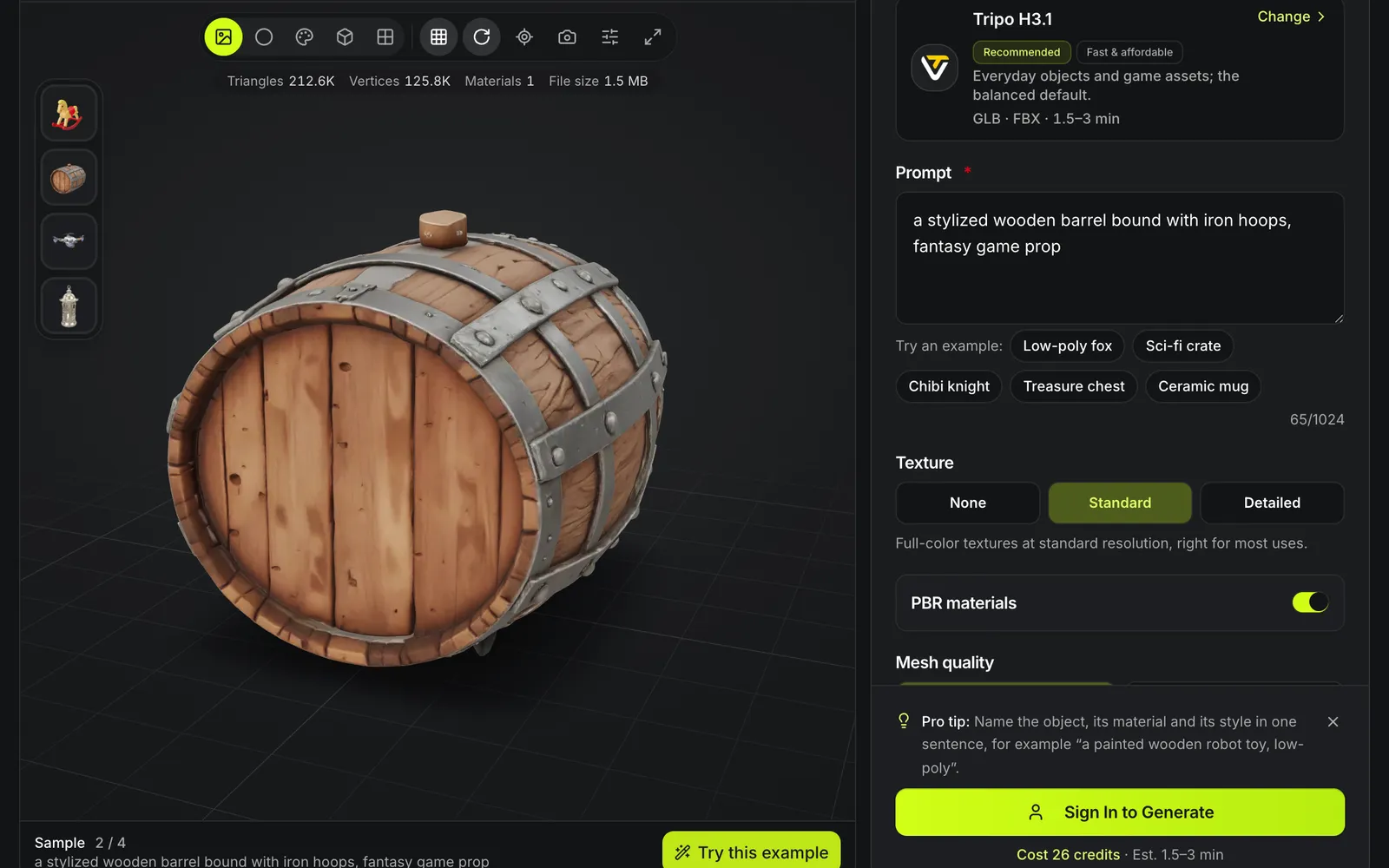
Try this example copies the rocking-horse prompt into the prompt box and keeps Tripo H3.1 selected at 26 credits. The sample turns in the viewer until the lantern thumbnail loads Rodin Gen-2.5's result.
Write a prompt that builds one clean model
Short prompts that name one object tend to give the cleanest meshes.
- 1
Start with the thing itself — "a brass desk lamp" — rather than a scene. Prompt-based generation builds one model, not a room.
- 2
Say what it is made of and how it should look: "brushed brass, low poly, flat colors".
- 3
Tripo H3.1 for quick textured drafts, Hunyuan3D 3.1 Pro for PBR detail, Meshy 7.1 when you need USDZ or posed characters.
- 4
Change one word at a time and rerun; keep the seed where the model offers one to compare fairly.
What people make with prompt-based generation
Text prompts suit objects that are easy to describe and do not need to match an existing design.
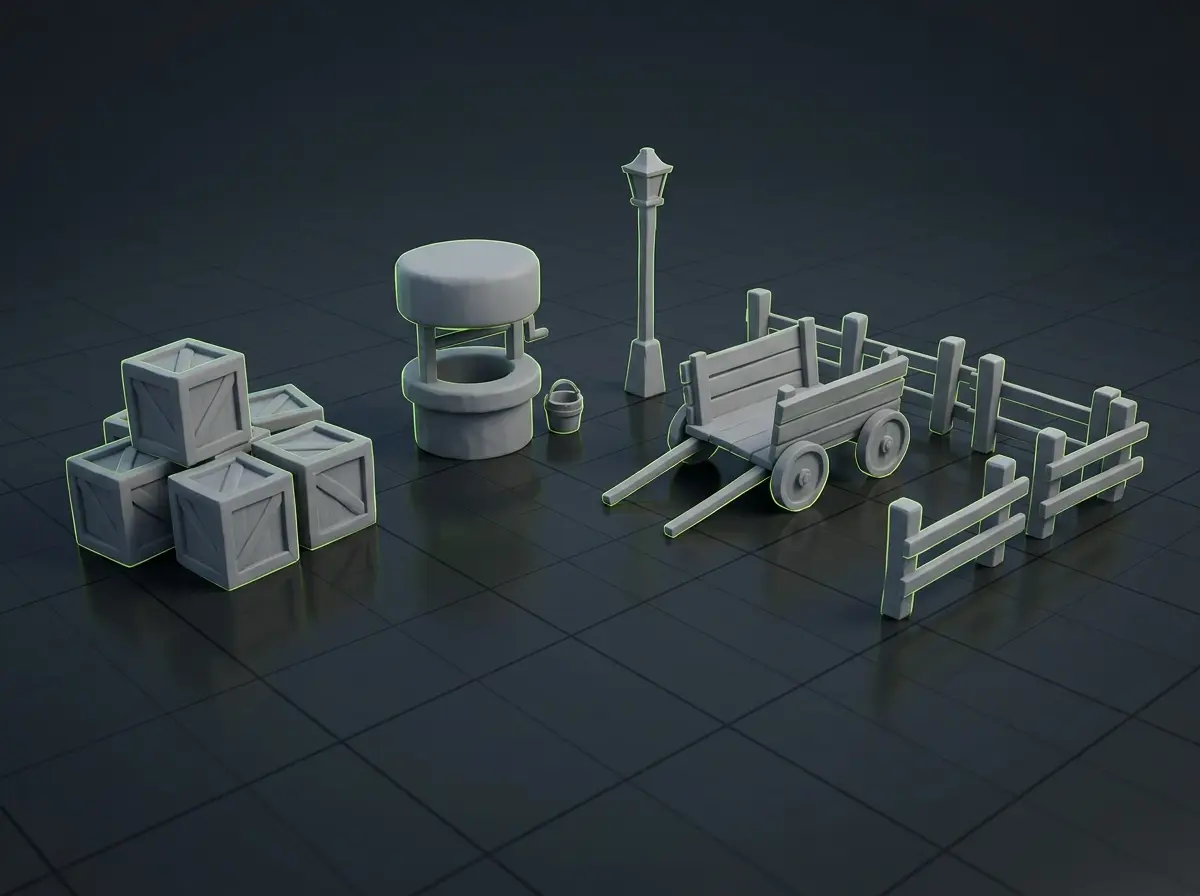
Placeholder assets
Block out a level with props generated from a list of names, then replace the ones that matter.
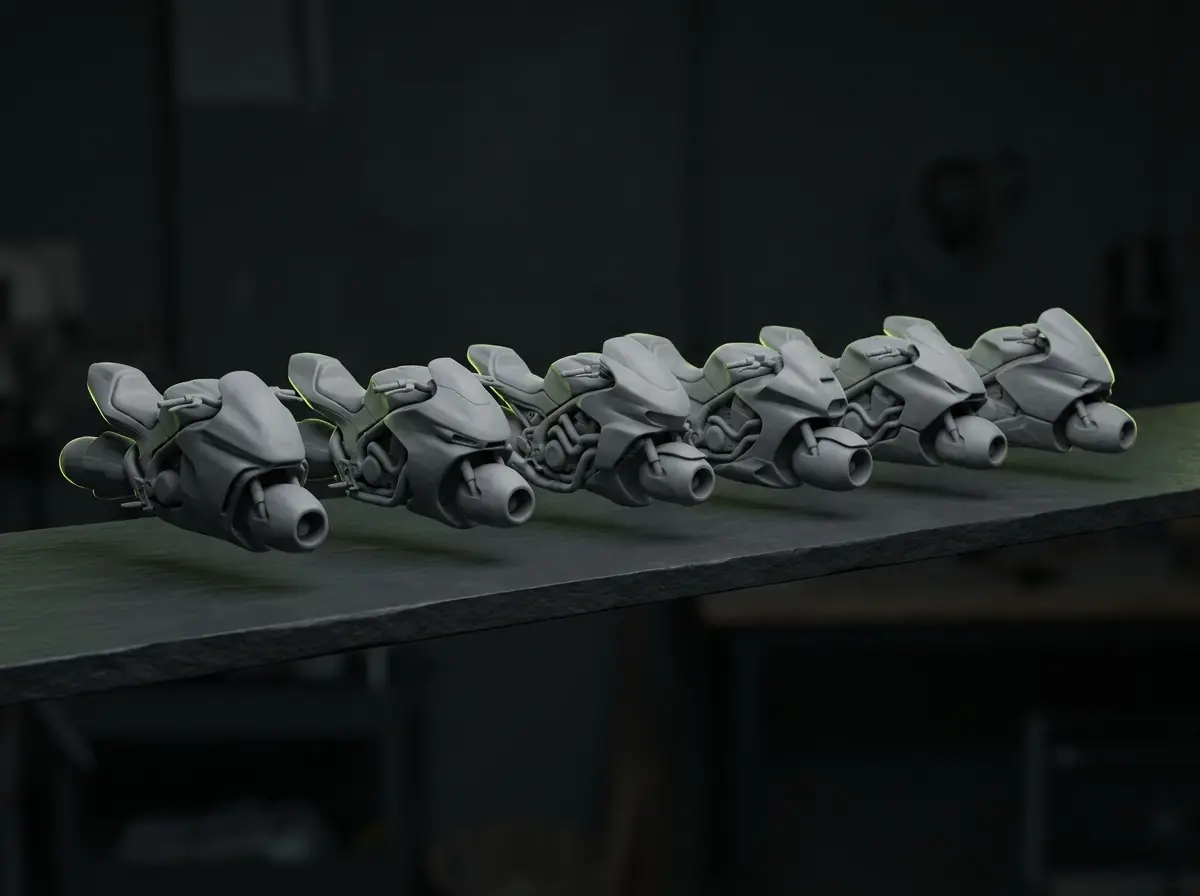
Concept exploration
Try ten variations of a vehicle or creature before anyone draws the final design.
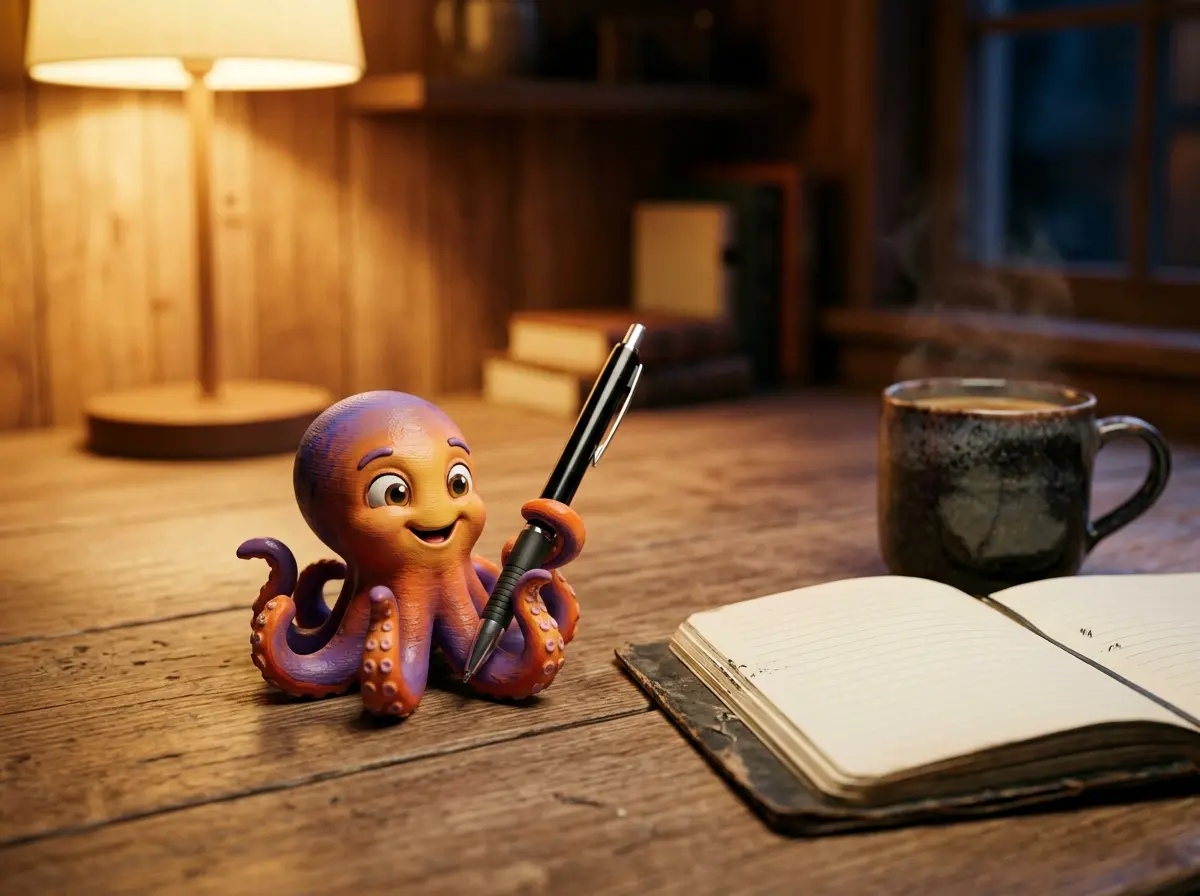
Printable trinkets
Describe a desk ornament, generate it, and send it to the printing tools for STL output.
Where prompt-based generation falls short
A prompt is a loose brief, and the model fills every gap with its own defaults.
Exact designs need a picture
Logos, faces and specific products rarely match from words alone.
Prompt limits differ
Hunyuan3D 3.1 Rapid stops at 200 characters and Meshy 7.1 at 600; longer prompts must be cut.
Text inside the model is unreliable
Lettering on a sign or label usually comes out garbled.
One object per run
Asking for a whole scene tends to produce a single fused lump.
Prompt-based generation FAQ
Answers about prompt-based 3D generation.
Describe it, then build it
Write one object, pick a model, and see the credit cost before you submit.